

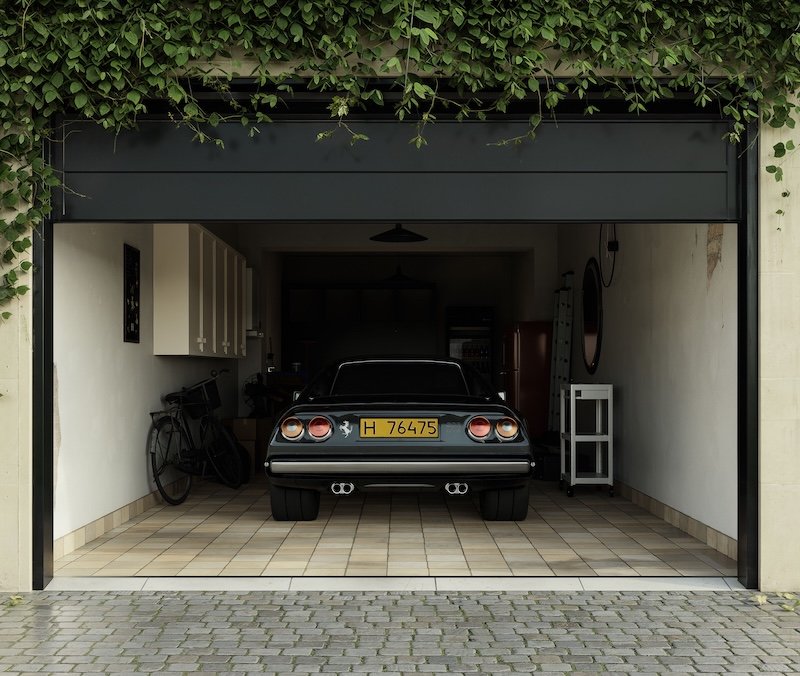
Years ago, I took a trip to San Francisco and was kind of amazed by how aggressive the parking felt. People parked right up to the edge of driveways. A lot of cars seemed to have special bumper protectors, or just heavily chipped bumpers that suggested the protectors were no longer optional. And finding a genuinely good parking spot felt way harder than it should’ve.
That trip stuck with me because it made me think about how much a city shapes the way people use their cars. In Seattle, the parking pressure can be real too, but another part of the garage conversation is the car itself. A garage is nice because pollen, rain, and cold temperatures can wear a car down pretty quickly over time, especially if it lives outside every day.
A Seattle listing can say “garage” and still leave out the most important part, which is whether the garage is actually useful for parking a car.
That sounds like splitting hairs until a showing gets to the alley, the driveway, or the old basement garage and it becomes pretty obvious what’s going on. The garage exists. The door opens. There may even be a car-shaped space inside. But the approach is too tight, the ceiling is low, the slab is uneven, the door is narrow, the driveway is steep, or the garage was built for a version of daily life that didn’t involve modern SUVs, bikes, strollers, garbage bins, Costco storage, and three different things that need to be charged.
Seattle has a lot of garages like this because Seattle has a lot of older homes, odd lots, alleys, slopes, and houses built before today’s parking expectations. A garage in Wallingford, Queen Anne, Ballard, Capitol Hill, West Seattle, Beacon Hill, Green Lake, or the Central District may tell a completely different story depending on the age of the house, the width of the lot, the alley access, and how the property meets the street.
Older detached garages are the classic version. Many of them sit off alleys, which can be a huge advantage when the alley is clean, wide enough, and easy to use, but the garage itself may have been built for smaller cars and a different household setup. A garage that once worked fine for an older compact car may not feel especially useful for a modern family car, especially if the alley turn is tight and the garage door opening is narrow. In practice, a lot of these become bike storage, tool storage, garden storage, band practice storage, or the place where old paint cans go to be forgotten.
That’s not necessarily a bad thing. Storage in Seattle is valuable, especially in older homes without big closets, finished basements, or large utility rooms. A garage that doesn’t park a car comfortably may still be a very useful part of the property if it works as a shop, gear room, home gym, bike room, or dry storage area. For someone with bikes, skis, tools, kid stuff, paddleboards, camping gear, or a dog-washing setup, a not-quite-car garage can still make the house live a lot better.
The issue is just being honest about what it is. There’s a difference between a real parking garage and a garage-shaped storage building, and that difference matters in a city where parking can be a major part of the daily experience.
That’s even more true lately because the vast majority of homes I’ve toured recently either have completely converted garages that are now extra living space, or they’ve truncated the garage so much to make more room for living space that it’s basically a shed situation. On paper, the listing may still suggest there’s a garage story there. In real life, it may be more about bonus square footage, storage, or a flex zone than a place where a car actually fits comfortably.
Basement garages are another Seattle thing, especially on sloped lots. A house built into a hill may have a garage tucked under the main floor, sometimes with direct access into the house and sometimes with a driveway that drops below street level. When that setup works, it can be great because the car, storage, laundry, mechanical systems, and workshop space all fit underneath the living area. When it doesn’t work, the garage can feel like a damp concrete cave with an awkward driveway attached.
This comes up a lot in hillside parts of Queen Anne, North Admiral, Leschi, Madrona, Mount Baker, Magnolia, and other neighborhoods where the house is using the grade instead of fighting it. The garage may be under the house because the slope made that layout possible, but slope also brings questions about driveway pitch, drainage, ceiling height, foundation walls, and whether the garage feels like parking, storage, or a future project.
Driveways deserve more attention than they usually get. A garage can be technically large enough, but if the driveway is steep, narrow, curved, shared, blocked by a retaining wall, or difficult to back out of, the parking experience changes. A driveway that seems acceptable during a quick showing may feel different in heavy rain, in the dark, with another car parked across the street, or when there are leaves and moss making the surface slick. This isn’t dramatic, it’s just Seattle doing Seattle.
Alley garages have their own set of tradeoffs. In a lot of older neighborhoods, the alley is where the practical stuff happens: garages, garbage cans, fences, sheds, power lines, delivery access, and the back side of everyone’s property. A good alley garage can make the front of the house cleaner and more pleasant because parking and service access stay in back, but a bad alley garage can be more theoretical than useful if the alley is too tight, too muddy, too steep, or too crowded with bins and parked cars.
That alley pattern shows up all over Ballard, Wallingford, Phinney Ridge, Greenwood, West Seattle, and parts of Capitol Hill and the Central District. Two homes can both say “detached garage,” but one may have a paved alley and easy access while the other requires a careful turn past garbage cans, a leaning fence, and a garage door that looks like it last had a pleasant day sometime around 1987.
Townhomes add another layer. Many newer Seattle townhomes include garages, but the garage may be doing more than one job. It might be parking, storage, entry, bike room, utility zone, and package drop all at once. In some townhomes, parking a car in the garage means losing most of the practical storage space. In others, the garage works well but only for a smaller car. Sometimes the garage is really more of a flex space that happens to have a garage door.
That’s one reason townhome parking is worth reading carefully. A listing may highlight an attached garage, which is valuable, but the actual daily use depends on the width, depth, turning radius, driveway slope, alley access, and whether the main living space is two or three flights above where the car goes. A garage in a townhome can be a major advantage, especially in dense areas like Capitol Hill, Green Lake, Ballard, Columbia City, and West Seattle, but it still needs to be understood as part of the whole layout.
Parking pads are another common Seattle compromise. A parking pad off the alley, side yard, or front driveway may be more useful than an old garage that’s too small, especially if it’s easy to access and doesn’t require opening a narrow door or threading through an awkward turn. The downside is exposure. A parking pad doesn’t offer the same storage, security, weather protection, or future flexibility as a garage, but it may solve the actual problem better, which is having a place to put a car without circling the block.
This is why the word “garage” shouldn’t be treated as a complete answer. In Seattle, it can mean secure parking, covered parking, storage, workshop space, DADU potential, a future teardown, a converted room, or a structure that mostly tells the story of how people used cars 80 years ago. A garage can be a major asset, but it can also be a line item that sounds better online than it feels in person.
There’s also the development angle. A detached garage on an alley can sometimes be part of a bigger conversation about a future DADU, studio, workshop, or backyard redesign. That doesn’t mean every garage can or should become something else, because zoning, lot size, setbacks, trees, sewer, utilities, access, cost, and design all matter, but rear access and an existing outbuilding can give a property more flexibility than it looks like at first.
For sellers, a garage should be described in a way that matches reality. If it’s a true usable garage with easy access, that’s a real selling point and should be shown clearly. If it’s better as storage, shop space, or future flexibility, that can still be valuable, but overselling it as easy car parking can create disappointment fast. Buyers tend to forgive quirks more easily when the property is explained honestly.
For buyers, the bigger point is that the garage is part of how the property functions, not just a checkbox. The garage affects parking, storage, hobbies, bikes, garbage, weather, security, future projects, and sometimes the whole way the home connects to the alley or street. It also affects value differently depending on the neighborhood. In a dense area with tight street parking, a functional garage may matter a lot. In a quieter pocket with easy curb parking, the same garage may be more about storage or flexibility than daily parking.
This also shows up in online searches and places like Reddit, where people compare Seattle houses and wonder why so many garages look too small, too steep, or too awkward for actual cars. The short answer is that many of them came from older housing patterns, older cars, sloped lots, alley access, and a city that kept changing around the houses.
A good Seattle garage is a real asset. A questionable one may still be useful, just not in the way the listing headline suggests. The important part is knowing which one it is.
If you're buying a home in Seattle, visit my Seattle buying guide. If you're thinking of selling your home, start with my selling roadmap. Browse Seattle neighborhoods or learn more about me.