

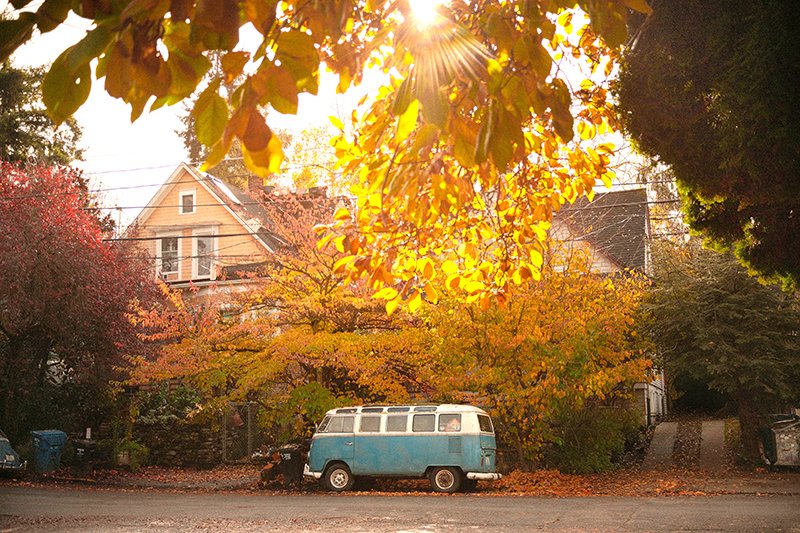
Parking in Seattle has changed a lot, and it keeps changing.
I remember growing up in West Seattle when parking around the Junction felt pretty easy. There were free parking lots near the local shops where you could park, run errands, grab food, go to the record store, or walk around without really thinking about it. Some of that still exists in pieces, but a lot of the old parking situation has changed. Some lots became paid. Some land has been redeveloped. Some areas have simply gotten busier. Going up to the Junction now is a different experience than it was years ago.
That’s not unique to West Seattle. It’s part of a much bigger shift across the city. Seattle has become denser, more walkable, more bikeable, and more transit-oriented. In many ways that’s a good thing. More people can live near shops, buses, light rail, parks, schools, and neighborhood centers. But it also changes how parking works. Space that used to be assumed as car storage is now competing with housing, transit, delivery zones, bike lanes, curb bulbs, outdoor dining, loading zones, and general street safety.
You can see this in grocery stores too. Older neighborhood grocery stores often had large surface parking lots. Newer mixed-use projects are much more likely to tuck parking underneath the building or into a garage, with apartments or condos above and retail at street level. That makes better use of valuable land, but it changes the feel of a quick grocery run. Instead of pulling into a big open lot, you may be going down a ramp, taking a ticket, entering a license plate, or navigating a tighter garage.
From a real estate perspective, parking isn't just a yes-or-no feature. It’s part of how a home actually functions.
A house with easy off-street parking lives differently than one where every grocery run turns into a small logistics problem. A condo with a secure garage space is different from one where parking is leased separately. A townhome with a “garage” that technically exists but barely fits a modern car is different from one with a real usable parking spot. A driveway is different from street parking. A flat driveway is different from one on a steep hill. In Seattle, those details matter.
A lot of older Seattle homes were built before modern car expectations. Some were built when horse-and-carriage infrastructure was still part of the city’s logic, and many were built when cars were smaller and fewer households had multiple vehicles. That’s why you see narrow garages, detached garages off alleys, steep driveways, short driveways, old carriage-house-style structures, and garages that have clearly become storage, studios, gyms, workshops, or extra living space instead of places to park a car.
That garage conversion piece is important. In Seattle, square footage is valuable, so people often repurpose garages and driveways. Sometimes that makes perfect sense. A basement garage that barely fits a car might be more useful as storage, a shop, a home office, or a workout space. But it also means the listing needs to be read carefully. “Garage” doesn't always mean “easy parking.” I want to know if a real car fits, how hard it is to get in and out, whether the driveway is shared, whether the alley access works, and whether the space is actually useful for the way someone lives.
Condos and apartments have their own version of this. Many buildings have underground parking, but the space may be deeded, assigned, rented, leased, or completely separate from the unit. In some buildings, a parking spot can be a meaningful part of the value. In others, it’s an expensive monthly add-on. For buyers, it’s worth understanding exactly what comes with the unit, whether the space is included in the sale, whether guest parking exists, whether EV charging is available, and how the HOA handles parking rules.
I once lived in a condo where parking spaces became their own little HOA drama. One person was using a parking space for firewood. Another was using theirs as overflow storage. On one hand, I get it. Storage is tight in the city. On the other hand, parking spaces in a condo building aren't always treated casually by the rest of the building. It became a recurring “thing” at meetings, because in a dense building, one person’s storage solution can quickly become everyone else’s parking, safety, or rules issue.
Newer construction has changed the equation too. Seattle has reduced or removed parking requirements in many areas, especially around frequent transit, urban villages, and dense multifamily zones. The “25% parking” idea can show up in specific projects, affordable housing discussions, or individual building choices, but it’s not a clean citywide rule I’d state as a blanket standard. The more accurate takeaway is that many newer Seattle buildings, especially near frequent transit, aren't required to provide one parking space for every unit, and some aren't required to provide off-street parking at all. King County Metro’s Right Size Parking materials describe Seattle as having no minimum parking requirement in urban centers and no minimum for residential uses in commercially and multifamily-zoned urban villages where frequent transit exists within a quarter mile. Seattle’s own 2025 guidance also notes that parking reductions continue and that some middle housing types have no parking requirement within a half mile of a major transit stop. (metro.kingcounty.gov) (buildingconnections.seattle.gov)
That's a major shift from the older assumption that every home automatically comes with a place for a car. It also means buyers shouldn't assume newer equals easier. A newer building may have great insulation, efficient systems, and a modern layout, but parking may be limited, unbundled, expensive, or missing entirely.
Residential Parking Zones are another Seattle-specific thing to understand. RPZs are areas where residents can apply for permits that allow them and their guests to park longer than the posted limit, usually in places where outside parking pressure is high. SDOT says RPZ permits allow residents and guests to park longer than posted time limits, and current resident permits cost $95 per vehicle, though some zones are subsidized by nearby institutions. (seattlegov.zendesk.com)
Officially, Seattle’s current RPZ permits are vehicle-specific and digital, but a lot of people still think of them as the little stickers on the back of the car. You’ll still see older cars around town with a whole history of RPZ stickers stacked in the rear window or bumper area, almost like a little neighborhood badge collection. It’s a very Seattle thing. You can sometimes tell where a car has lived by the old permits it’s accumulated.
You see RPZs around places where parking gets heavily used by people who don’t necessarily live there: hospitals, schools, stadiums, business districts, dense apartment areas, and neighborhoods near major destinations. They can help, but they don’t guarantee a spot in front of your house. They just change the rules for how long permitted residents can park compared with everyone else.
Paid parking has changed too. Downtown and busier commercial areas now use pay-by-plate machines and apps instead of the old paper sticker system. SDOT’s pay-by-plate system lets drivers enter a license plate number at the pay station, and parking enforcement checks payment against the plate rather than a printed window sticker. Apps like PayByPhone are also part of the experience now, which is convenient, but it also means parking has become more digital and more managed. (seattle.gov)
The curb itself is more complicated than it used to be. Seattle uses curb space for parking, loading, deliveries, transit, bike infrastructure, parklets, bus lanes, passenger pickup, and traffic management. SDOT even notes that allowing parking on both sides of a street can be a low-cost traffic calming tool because narrower streets tend to slow drivers down. That’s a good example of how parking isn't just about storing cars. It’s also part of how the city manages speed, safety, access, and street design. (seattle.gov)
Seattle hills add another layer. Parking on a steep hill is normal here, but it still affects daily life. Parallel parking on a slope, walking groceries uphill, dealing with wet leaves, turning wheels correctly, and watching wear on brakes or clutches all become part of the reality in certain neighborhoods. Queen Anne, Capitol Hill, parts of West Seattle, Magnolia, Beacon Hill, and Leschi can all give you a very different parking experience than flatter parts of the city.
There are also neighborhood habits that become de facto local customs. In some crowded residential areas or along certain arterials, you’ll see cars parked with two tires up off the road or partially onto a planting strip or curb edge. I wouldn’t call that normal everywhere, and it’s not something I’d treat as a guaranteed legal parking strategy, but it does show how tight parking can get on some blocks. People adapt to the street they live on.
Park-and-ride systems are another important part of the broader parking picture. Seattle and the surrounding region have a lot of ways to avoid driving all the way into the densest areas. People park near buses, light rail, ferry terminals, and other transit connections, then ride or walk on from there. That’s especially relevant for ferry commuters and for people trying to get downtown without paying downtown parking rates or sitting in traffic. It’s one of the reasons location near useful transit can matter even for people who still own cars.
Major events are their own parking category in Seattle. Seahawks games, Mariners games, Sounders matches, Kraken games, big concerts, Seafair weekends, and large events at Lumen Field, T-Mobile Park, Climate Pledge Arena, and Seattle Center can completely change how parts of the city feel for a few hours. Parking that seems easy on a normal weekday can become much more expensive and much more competitive when there’s a major event.
I actually think Seattle has gotten better at handling this over time. Around the stadiums, traffic routing, police control, event signage, light rail access, garage parking, and larger paid lots usually make the process more organized than people expect. It can still be expensive, and it’s not always pleasant, but the larger event parking facilities often do their job. For a big game or concert, paying for a real garage or lot can be worth it compared with circling around side streets and creating your own headache.
Climate Pledge Arena is a good example of how the city has pushed people toward a mix of garages, transit, monorail, rideshare, and walking. The Seattle Center area has structured parking nearby, but a lot of people also park farther out or use the monorail from downtown. For stadium events, light rail, buses, ferries, and paid lots all become part of the strategy. It’s not just “where do I park?” It’s “what’s the least annoying way to get in and out?”
From a real estate perspective, this matters most near the stadium district, Seattle Center, Lower Queen Anne, Uptown, Pioneer Square, SoDo, parts of Capitol Hill, and neighborhoods near major transit connections. Living near event areas can be great because there’s so much going on, but it also means understanding what happens on game days, concert nights, and big summer weekends. The same block can feel very different on a quiet Tuesday versus right before a sold-out show or playoff game.
It’s also a good reminder that parking isn't just about your own driveway or garage. In Seattle, the broader transportation system matters. A home near light rail, a ferry route, a good bus line, or an easy rideshare pickup spot can function better during major events than a home that technically has parking but leaves you stuck driving through the worst of the traffic.
Collector cars are a fun Seattle side note too. We actually have some interesting options for people who care about cars but don’t necessarily have the space at home. The Shop in SoDo is a membership-based car and motorcycle club with secure vehicle storage, lifts, wash bays, service, and enthusiast events. It’s the kind of place that makes sense in Seattle because a lot of people love cars, but don’t necessarily have a big garage at home. (theshopclubs.com)
SODO Moto also lists collector car and motorcycle storage near the base of the West Seattle Bridge along the Duwamish, with indoor storage, trickle-charger power, and pricing by vehicle size. Their listed storage rates include roughly $275 per month for a small car, $300 for a medium car, $350 to $425 for larger cars, and $100 to $125 for most motorcycles. (sodo-moto.com) On the Eastside, One Drivers Club in Redmond offers a larger enthusiast-oriented storage and clubhouse setup, with 24/7 keypad access and capacity for more than 200 vehicles. (onedriversclub.com)
For someone with an older Porsche, vintage Land Cruiser, classic BMW, JDM import, motorcycle, or project car, the parking and storage situation at home matters a lot. Seattle weather is generally mild, but the dampness is real, and a collector car sitting outside under trees isn't ideal. A good garage, covered parking, or nearby storage option can genuinely change what kind of property works. If you think about the car itself as part of daily life here, my piece on the best cars for Seattle gets at the other side of that equation.
For buyers, the big thing is to think beyond whether the listing says “parking.” Does the parking actually work? Does the garage fit your car? Is there room to open the doors? Is the driveway usable in winter? Is the alley too tight? Is there guest parking? Can you charge an EV? Is street parking easy at 6 p.m. or only at 11 a.m.? What happens during school pickup, Alki summer weekends, stadium events, Green Lake laps, or restaurant rushes?
For sellers, parking should be presented clearly. If the home has a real garage that fits a car, show it. If the driveway is a major advantage, make that obvious. If street parking is surprisingly easy, that can be part of the story, but it should be handled honestly. If the garage is better as storage or workspace, don’t pretend it’s a perfect parking solution. Buyers will figure it out quickly once they’re there.
The future matters too. Seattle’s zoning and transportation planning aren't frozen in place. The city is continuing to add density, shift parking rules, improve transit, manage curb space differently, and rethink how streets are used. A home that has easy parking today may be in a neighborhood that changes over time. A quiet street near a future development area, transit corridor, or growing business district may not feel the same ten years from now.
That doesn't mean parking should control every decision. In some neighborhoods, being able to walk to coffee, groceries, schools, parks, light rail, restaurants, or a ferry can matter more than having a giant driveway. In other situations, parking is non-negotiable. It depends on the person, the home, the neighborhood, and the daily routine.
That’s really the point. In Seattle, parking is part of the real estate decision. It affects convenience, resale, rental value, accessibility, storage, EV charging, daily errands, and how the home actually lives. It’s not the most glamorous thing to talk about, but it’s one of those details that can make a good home feel easy or make a beautiful home feel frustrating.
When I’m looking at a property, I’m not just asking whether it has parking. I’m asking whether the parking makes sense for the life someone is trying to build there.
If you're buying a home in Seattle, visit my Seattle buying guide. If you're thinking of selling your home, start with my selling roadmap. Browse Seattle neighborhoods or learn more about me.