

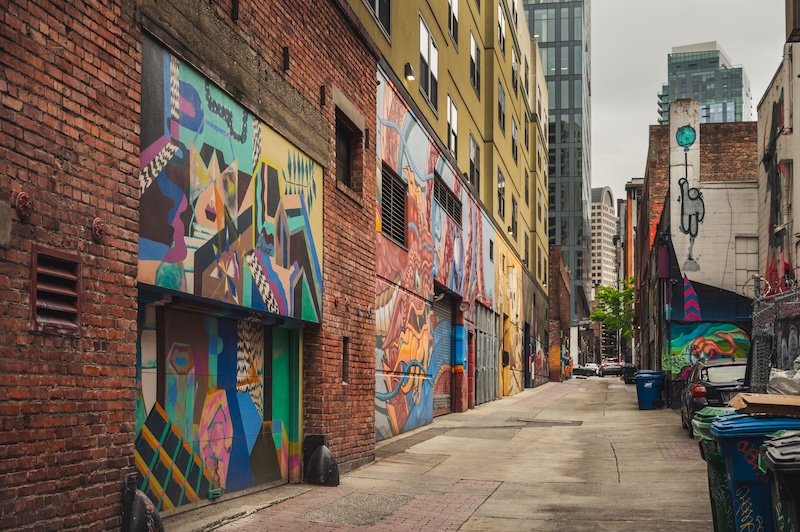
Ever notice how some Seattle houses have everything handled from the back, while others have the driveway, garage, garbage cans, and parking all fighting for space out front? A lot of that comes down to alley access.
It isn't the kind of thing that usually gets people excited in listing photos, but it can make a house work a lot better. In a lot of older Seattle neighborhoods, alleys were part of how the block was supposed to function. The house faced the street, the porch and front yard were out front, and the less attractive stuff like garages, garbage cans, deliveries, sheds, and service access happened in back. When that setup works, the front of the house can feel more like a home instead of a parking area.
You see that in a lot of Ballard, Wallingford, Queen Anne, Capitol Hill, Central District, Phinney Ridge, Greenwood, and parts of West Seattle. A detached garage off the alley, a place for garbage cans, a back gate for bikes or tools, and a front yard that doesn't have to do everything at once can make a property feel much easier to live with.
The catch is that Seattle alleys aren't all the same. Some are paved and easy. Some are gravel, muddy, steep, narrow, full of potholes, or squeezed between fences and retaining walls. Sometimes a listing says "detached garage," and technically that's true, but once you actually see the approach from the alley, it's pretty clear the garage is more useful for bikes, storage, tools, or a workshop than daily parking.
That doesn't make it useless. It just means you need to understand what it really is. A garage is only as good as the access to it. If turning into it requires a five-point maneuver, or the door is too narrow for a modern car, or the alley feels miserable on a rainy night, then it shouldn't be valued the same way as an easy off-street parking spot.
Parking is one of the biggest reasons alley access matters in Seattle. Around Capitol Hill, Ballard, Green Lake, Wallingford, Fremont, Columbia City, and denser parts of West Seattle, having a real place to put a car can change the day-to-day experience of the house. But I wouldn't just ask whether there's parking. I’d want to know whether the parking actually works.
Can you turn into it comfortably? Is the alley paved? Does it drain well? Are there garbage cans blocking the path? Are there overhead wires? Is the garage door wide enough? Is the slab level? Would you actually park there at night in the rain, or would you end up using the street anyway? Those aren't glamorous questions, but they're the kind of questions that matter once you live there.
Alley access also comes up a lot with Seattle townhomes. Many newer townhome projects rely on the alley for parking, garages, garbage, and the less polished parts of the property. The street side might look clean and simple, but the alley often tells you how the project really works. You can see where the trash goes, how tight the parking is, whether the garages are usable, how the neighboring properties are maintained, and whether the whole thing feels thoughtfully designed or just squeezed onto the lot.
I like looking at the back side of a property whenever possible for that reason. The front is usually the marketing side. The alley is often more honest. That's true for older single-family homes too. A clean, usable alley can make the backyard easier to access, make projects more realistic, and give the property more flexibility over time. If someone wants a detached office, a shop, a garage conversion, or a future DADU, rear access can make those ideas more practical, even though zoning, trees, sewer, utilities, setbacks, slope, design, and cost still matter.
There's also a privacy piece. Sometimes an alley creates a little separation behind the house, which can make the backyard feel less boxed in. Other times the alley is busy, messy, or exposed, and the backyard feels less private than you expected. Like most Seattle property details, it depends on the actual block.
In Wallingford, an alley behind an older home may feel like a normal part of the neighborhood. In Ballard, it may be a mix of old garages, new townhomes, and changing density. In Queen Anne, the slope can make alley access either really useful or kind of ridiculous. In West Seattle, one block might have easy alley-loaded garages while another nearby area relies almost entirely on front driveways and street parking.
For buyers, I'd treat alley access as part of how the home functions, not just a line in the listing. Walk it if you can. Drive it if that seems realistic. Look at the garage, the drainage, the garbage setup, the neighboring properties, and whether the alley feels like something you'd actually use. A house can have a "garage" and "off-street parking" and still not really solve your parking problem.
For sellers, alley access can be a real selling point, but it should be explained clearly. If the property has a usable garage, parking pad, detached shop, easy backyard access, or future flexibility, buyers should understand that. If the garage is honestly better for storage than parking, it's better not to oversell it. Buyers usually figure that out quickly once they see the property in person.
The bigger point is that Seattle homes often make more sense when you look past the front photo. The alley can tell you where the car goes, where the garbage goes, whether the garage matters, whether the backyard is accessible, whether the block feels maintained, and whether future projects are realistic.
Two homes can have the same square footage, same bedroom count, and same neighborhood, but live very differently because one has useful alley access and the other doesn't. That's the kind of detail that doesn't sound exciting at first, but can make a real difference once you live there.
If you're buying a home in Seattle, visit my Seattle buying guide. If you're thinking of selling your home, start with my selling roadmap. Browse Seattle neighborhoods or learn more about me.