

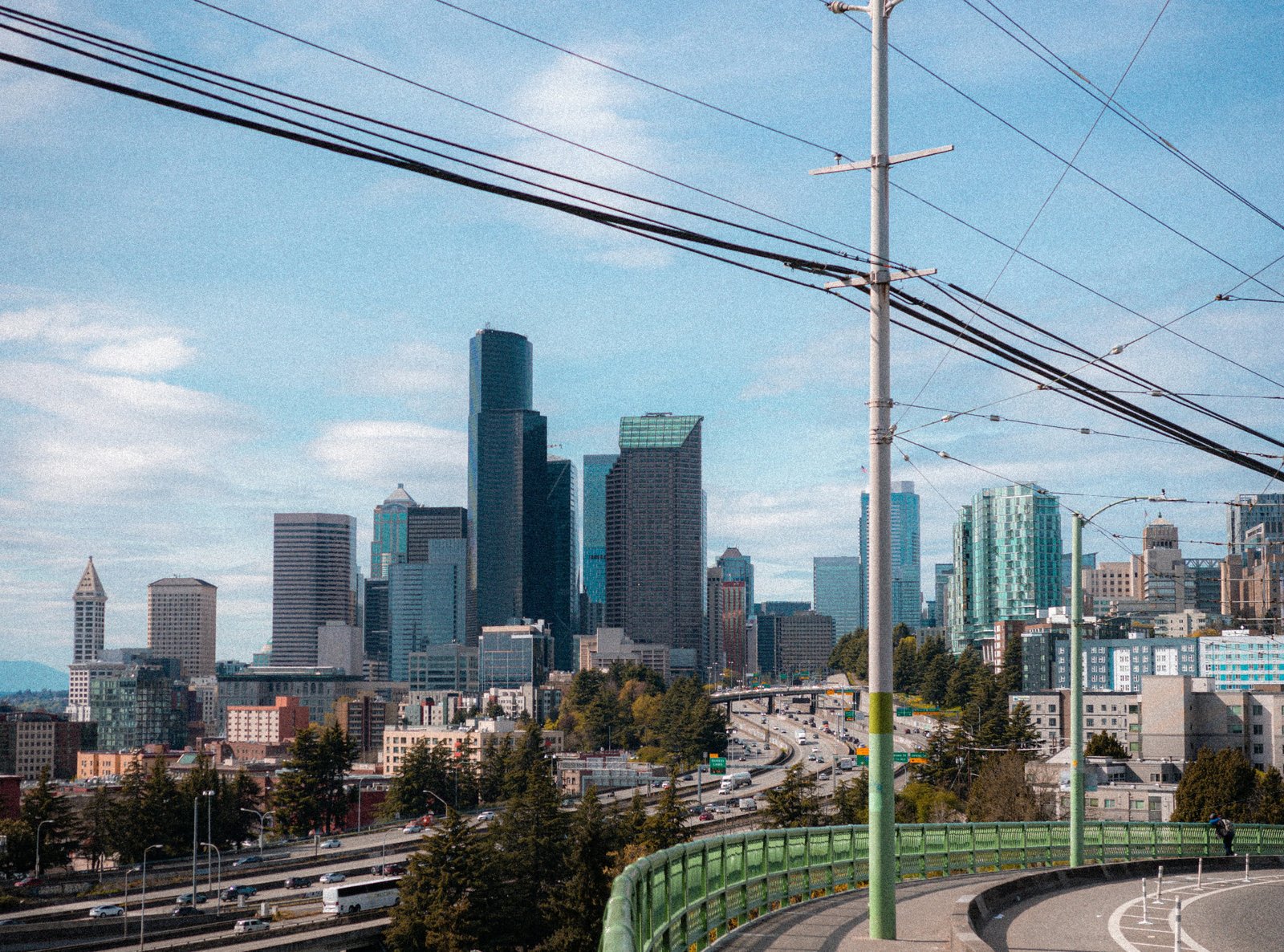
Seattle blocks can look surprisingly different once you start paying attention to the utility setup. Some have poles and wires running right down the street. Some push most of that into the alley. Some newer projects bury more of it underground. Sometimes the lines are on one side of the street and not the other, which can make two houses across from each other feel more different than they look online.
Power lines and utility poles can affect views, trees, parking, curb appeal, future projects, and the day-to-day feel of a property.
In Seattle, overhead power lines are still very common. You see them all over West Seattle, Ballard, Wallingford, Greenwood, Phinney Ridge, Beacon Hill, Central District, Capitol Hill, and plenty of other neighborhoods. It's part of the older infrastructure of the city, and it often follows the way the block was originally laid out.
On some blocks, the poles run along the street. That means the front of the home may have wires, poles, guy wires, transformers, or service lines visible from the living room, porch, front yard, or upper floor. On other blocks, the main utility run is in the alley, which can keep the street side cleaner but may make the back of the property feel more cluttered.
Neither setup is automatically good or bad. It depends on the house, the lot, the view, the trees, and how the block actually works.
If the power lines are on the street side, they can affect curb appeal and parking more than people expect. A utility pole might sit right in front of the house, near the curb, or close to where someone would naturally park. Sometimes that's not a big deal. Other times it makes the curb feel chopped up, blocks an easy parking space, or creates an awkward driveway or sidewalk situation. If there are guy wires or support cables, that can make the area feel even more constrained.
This is especially noticeable on narrower Seattle streets where parking is already tight. In parts of Capitol Hill, Wallingford, Green Lake, Fremont, Columbia City, and the Junction area of West Seattle, one pole, one curb cut, one fire hydrant, and one busy block can change how usable the street parking feels.
Power lines also matter with trees. Seattle has a lot of mature trees, which is part of what makes many neighborhoods feel good, but trees and overhead wires don't always play nicely together. You’ll see street trees trimmed into strange shapes to keep them away from the lines. Sometimes the canopy looks beautiful on one side of the street and heavily cut back on the other. That can change the feel of the block, the amount of shade, and even how private the front of a house feels.
This can be a real difference when you're comparing houses across the street from each other. One side may have a cleaner tree canopy, fewer overhead lines, and a better view from the upper floor. The other side may have wires running directly through the sightline, more utility clutter, or trees that have to be trimmed more aggressively. Same block, same neighborhood, very different feel.
Views are probably the most obvious real estate issue. If you're looking at a home in North Admiral, Alki, Fauntleroy, Queen Anne, Magnolia, Leschi, Madrona, or Mount Baker, power lines can be part of the view conversation. A water, mountain, skyline, or territorial view can still be valuable with wires in it, but it's not the same as a clean view.
Listing photos don't always make this obvious. A photographer may shoot around the wires, use a different angle, or focus on the best window. Then you stand in the room and realize the power lines are right in the middle of the view. That doesn't mean the house is bad, but it's something I'd want a buyer to actually see and think about.
Alley power lines are a different story. In many older Seattle neighborhoods, the alley carries a lot of the less attractive but very practical parts of the block: garages, garbage cans, utility poles, overhead wires, sheds, fences, and service access. That can be a good tradeoff because the street side stays cleaner. The front yard, porch, and main entry may feel nicer because all the utility stuff is behind the house.
The downside is that the backyard, garage, or rooftop deck might be looking at poles and wires. With some townhome projects, especially in denser areas of Ballard, Central District, Green Lake, Roosevelt, and Beacon Hill, the alley side can tell you a lot about how the property really functions. You might have garage access, garbage staging, utility meters, overhead wires, and neighboring townhome walls all in one tight area.
That's why I like looking at both sides of a property. The front photo can look clean and simple, but the alley often gives you the more honest version. You can see how parking works, where the garbage goes, how tight the garage access is, and whether the back side of the home feels private or more like a service lane.
Buried utilities are usually cleaner visually. You're more likely to see underground utilities in some newer developments, planned communities, newer townhome projects, and some rebuilt streetscapes. It can make the block feel more polished because there are fewer poles and overhead lines competing with trees, views, and architecture.
But underground utilities aren't magic either. They can be more expensive to install, they still need access points, and they don't automatically mean the rest of the property is better. A house with buried utilities but poor layout, bad drainage, no parking, or awkward outdoor space is still going to have those issues. It's just a cleaner-looking utility setup.
For buyers, the main thing is to pay attention to where the utility lines are in relation to the actual living experience. Are they in front of the main windows? Do they cut through the view? Are they over the yard? Do they run near a big tree that will need ongoing trimming? Is there a pole affecting parking or driveway access? Are the lines in the alley, and if so, does that make the street side cleaner or the backyard less appealing?
It also matters for future plans. If someone is thinking about adding a DADU, building a garage, improving a backyard, adding solar, changing a driveway, or doing a larger remodel, utility location can become part of the conversation. Overhead service lines, poles, clearances, tree conflicts, and alley access can all affect what's practical and what's expensive. This isn't usually the first thing people think about, but it can come up quickly once contractors and utility requirements get involved.
For sellers, power lines are one of those details you don't want to pretend don't exist. If they're visible, buyers will see them. The better approach is to show the property honestly and emphasize what still works. Maybe the wires are on the alley side and the street presence is clean. Maybe the view is still strong even with some wires. Maybe the home has great light, privacy, and layout despite utility lines nearby. Buyers can handle tradeoffs when they understand them clearly.
The bigger point is that Seattle blocks aren't uniform. One side of the street can have more wires, more poles, more tree trimming, and worse parking, while the other side feels cleaner and more open. One block can have alley utilities. The next block may have poles out front. A newer townhome project might bury more of the utility work, while the older houses around it still have overhead lines.
That's why a Seattle home search is so hard to do from photos alone. The stuff that changes how a property feels is often outside the frame. Power lines, trees, alleys, poles, driveways, slope, parking, and views all interact.
A wire across a view might not bother one buyer at all. Another buyer will never unsee it. A pole near the curb might be irrelevant if you park in a garage. It might be a daily annoyance if street parking is tight. Alley utilities might be a great tradeoff if they keep the front of the house clean. They might be a drawback if the backyard or roof deck feels boxed in by wires.
That's the practical way to look at it. Not “are power lines bad?” but “how do they affect this specific house?”
In Seattle real estate, that's usually where the useful information is. The details around the property can matter almost as much as the property itself.
If you're buying a home in Seattle, visit my Seattle buying guide. If you're thinking of selling your home, start with my selling roadmap. Browse Seattle neighborhoods or learn more about me.