

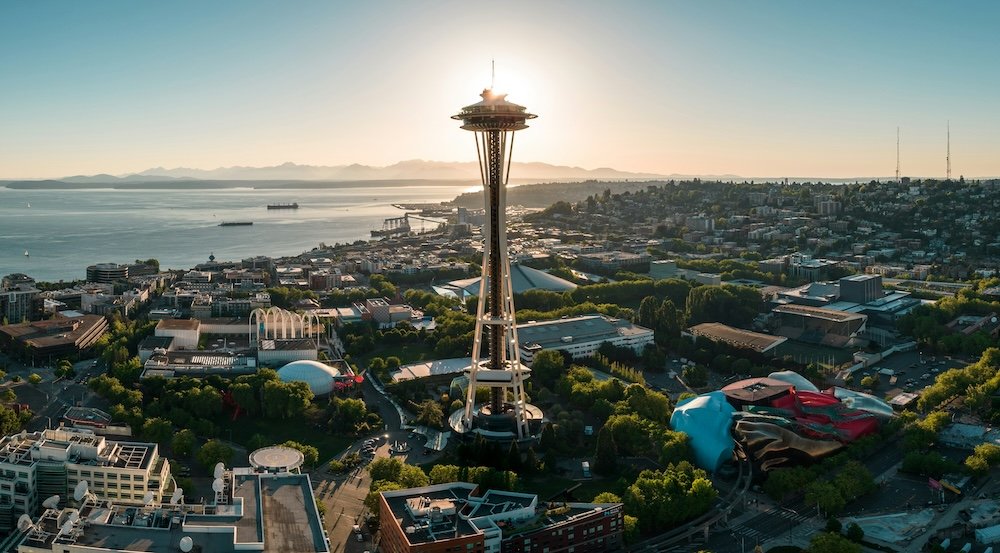
Seattle has a lot of place names that do not sound exactly how they look. Some are neighborhoods. Some are cities that come up when people are comparing homes around the region. Some are Indigenous names that deserve care and respect. Some are just local habits, like saying I-5 instead of "the 5."
Here is the practical version. No big lecture, no weird local test. Just a quick guide to names that come up a lot when people are learning the Seattle map.
Alki is AL-kai, not all-key. It is the West Seattle beach name people learn quickly once they spend time over here, and it comes up in real estate because Alki has a very specific setting: waterfront, views, condos, smaller houses, hillside homes, summer activity, parking pressure, salt air, and a different feel from Admiral, the Alaska Junction, or Morgan Junction. The name comes from Chinook Jargon and is often translated as "by and by" or "eventually."
Puyallup is pew-AL-up, not pull-YALL-up. It is probably the classic Washington pronunciation name. It looks harder than it is, and almost everyone new to the area has to hear it once before it clicks. The name comes from Lushootseed, so this is one to say with respect rather than treating it like a punchline.
Issaquah is ISS-uh-kwah, not iss-AH-kwah. It comes up all the time in Eastside home searches because it is tied to I-90, the foothills, trails, newer homes in some areas, older homes in others, and a different daily rhythm from central Seattle.
Renton is usually closer to REN-tin than REN-tawn. The spelling looks straightforward, which is probably why it still trips people up. From a real estate perspective, Renton covers a lot of ground, including lake-adjacent areas, hillier residential pockets, older homes, newer construction, Boeing-area history, and routes toward Seattle, Bellevue, Kent, and Sea-Tac.
Duwamish is doo-WAH-mish, not doo-wuh-MISH. The Duwamish River and Duwamish Valley help explain the industrial corridor, West Seattle's relationship to the rest of the city, Georgetown, South Park, SODO, Harbor Island, and a lot of the working waterfront. It is also the name of the Duwamish people, so it is worth saying carefully.
Sequim is skwim, not SEE-kwim or se-QUIM. It is the one that looks like it should have more syllables, but it does not. It comes up constantly in Washington life because of ferries, weekend trips, lavender, sun, retirement, and the occasional real estate search across the water.
Tukwila is tuck-WILL-uh, not took-WHEEL-uh. It is south of Seattle near Southcenter, Sea-Tac, Renton, and the Green-Duwamish corridor, so it shows up a lot in South King County movement and commuting conversations.
Snoqualmie is sno-KWAL-mee, not snow-QUAL-mie. People hear it in Snoqualmie Falls, Snoqualmie Pass, Snoqualmie Valley, and the city of Snoqualmie. In real estate, it usually brings up I-90 commuting, mountain views, trail access, newer planned neighborhoods, and a lifestyle that feels very different from living inside Seattle.
Sammamish is suh-MAM-ish. It is another Eastside name that starts showing up constantly once people look beyond Seattle proper. It often comes up around space, suburban streets, newer homes, Eastside access, and commute tradeoffs.
Mukilteo is muh-kil-TEE-oh, not moo-kill-TEE-oh. It is north of Seattle near Everett, Boeing, the water, and the ferry to Whidbey Island. It has a very Puget Sound feel: hills, views, ferry traffic, waterfront, and north-end commuting.
Des Moines here is duh-MOINZ, not the French way. Washington's Des Moines is south of Seattle along Puget Sound, and it comes up in searches around marina access, condos, older homes, views in some areas, Burien, Normandy Park, SeaTac, and Federal Way.
Leschi is LESH-eye, not LESH-ee. It is a Seattle neighborhood on Lake Washington, south of Madrona and north of Mount Baker. In housing terms, Leschi can mean lake access, views, hills, older homes, townhomes, and a close-in location that feels different from Capitol Hill, Madrona, or the Central District.
Fauntleroy is FAUNT-luh-roy, not font-le-ROY. It is in West Seattle near Lincoln Park, the ferry dock, the water, and some of the quieter residential streets on the south end of the peninsula.
Suquamish is suh-KWAH-mish, not soo-kwa-MISH. It is a strong Puget Sound name to know because it is tied to the Suquamish Tribe and Chief Seattle, who was a Suquamish and Duwamish leader.
Tulalip is too-LAY-lip, not too-lah-LIP. It is north of Everett and often seen with the Tulalip Tribes, Marysville, I-5, and North Sound travel.
Steilacoom is STILL-uh-come, not style-a-coom. It is down in Pierce County near the water, with older homes, views in places, ferry access, and a historic town feel.
Chelan is shuh-LAN, not CHELL-an. It is not Seattle real estate, but it is part of the wider Washington vocabulary: lake trips, Eastern Washington heat, wildfire smoke, vacation homes, wineries, and the dry-side version of the state.
Then there is the freeway habit. Around Seattle, people usually say I-5, I-90, 405, 520, 99, and 509. Not "the 5," not "the 90," and not "the 405." That matters more than it sounds like it should, because roads are part of how the region works. West Seattle to I-5 is not the same as West Seattle to 99. North Seattle near I-5 feels different from North Seattle near Aurora. A home near 520 has a different Eastside relationship than a home near I-90. In West Seattle, "the bridge" usually means the West Seattle Bridge. If someone mentions "the viaduct," they may be using old Seattle muscle memory, since the Alaskan Way Viaduct is gone.
Quick cheat sheet:
Alki: AL-kai
Puyallup: pew-AL-up
Issaquah: ISS-uh-kwah
Renton: REN-tin
Duwamish: doo-WAH-mish
Sequim: skwim
Tukwila: tuck-WILL-uh
Snoqualmie: sno-KWAL-mee
Sammamish: suh-MAM-ish
Mukilteo: muh-kil-TEE-oh
Des Moines: duh-MOINZ
Leschi: LESH-eye
Fauntleroy: FAUNT-luh-roy
Suquamish: suh-KWAH-mish
Tulalip: too-LAY-lip
Steilacoom: STILL-uh-come
Chelan: shuh-LAN
The real estate point is simple: local names are part of learning the map. Once Alki, Renton, Issaquah, Tukwila, Leschi, Fauntleroy, and the I-5-not-the-5 thing start to feel normal, the region feels less abstract. From there, the more useful question is how the housing, commute, terrain, transit, parks, water access, and daily logistics differ from place to place.
That is the part I like helping people figure out. The pronunciation is just the start.
If you want more local context, these are useful references: Seattle Met's pronunciation guide, SeattlePI's pronunciation quiz, The Stranger's newcomer guide, SeattlePI's local phrases roundup, the City of Seattle neighborhoods page, King County Metro, and the King County Parcel Viewer.
If you're buying a home in Seattle, visit my Seattle buying guide. If you're thinking of selling your home, start with my selling roadmap. Browse Seattle neighborhoods or learn more about me.