

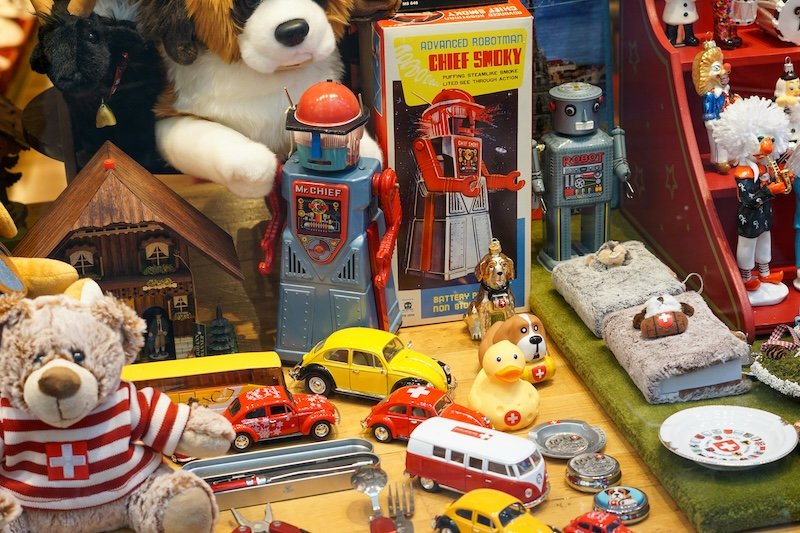
A lot of toys are easy to order online now. If a kid wants something specific, there’s a good chance it can show up at the door in a day or two. That’s convenient, but it’s not the same as walking into a real toy store.
One of the nice things about Seattle is that we still have a handful of independent stores that feel like actual places. Not just retail boxes, but neighborhood stops with personality. Kids can look around, pick things up, change their mind ten times, and find something they didn’t know existed. Parents can grab a birthday present quickly without scrolling through 900 identical options. And from a real estate perspective, these are exactly the kinds of small local businesses that make a neighborhood feel more useful and more complete.
Curious Kidstuff in the West Seattle Junction is a good example. The Junction already functions like one of West Seattle’s main neighborhood centers, with coffee shops, restaurants, Easy Street, the farmers market, local services, and enough day-to-day businesses that people can actually run errands without leaving the area. Curious Kidstuff fits right into that. It carries toys, books, games, puzzles, stuffed animals, art supplies, and the kind of birthday gifts that feel more thoughtful than grabbing something generic at the last second. They also host art classes for kids, with current West Seattle Junction info listing Monday and Friday classes from 10:30 to 11:30 for children 18 months and up.
That matters when thinking about living in West Seattle. A house near the Junction isn't just “close to shops” in some vague listing-copy way. It means there are actual places nearby that support daily life, especially for families. A smaller yard or older house can make more sense when a neighborhood gives you parks, schools, coffee, groceries, restaurants, a toy store, and places to walk. That’s one of the real tradeoffs in Seattle real estate. Sometimes you give up some private space to gain more useful shared neighborhood life.
Magic Mouse Toys in Pioneer Square is a different kind of Seattle toy store. It’s been around since 1977, and the store offers two floors and more than 6,000 square feet of toys and games from around the world. I used to go there as a kid, and it still feels like a destination rather than just a place to buy something. It has stuffed animals, puzzles, games, collectibles, and enough space that wandering around is part of the experience.
Pioneer Square gives Magic Mouse a very specific feel. It’s one of the oldest parts of Seattle, with brick buildings, old storefronts, galleries, bars, restaurants, offices, stadium traffic, tourists, and a lot of city history layered together. Living in or around Pioneer Square is very different from living in a quieter residential neighborhood, but culturally it’s one of the places that keeps Seattle from feeling generic. Stores like Magic Mouse help with that. They give people a reason to go downtown for something other than work, sports, or a restaurant reservation.
Archie McPhee in Wallingford is probably the clearest example of a toy store that could only really make sense in Seattle. The Wallingford store describes itself as a place for party supplies, crafts, costumes, miniatures, strange toys, candy, and the Rubber Chicken Museum, and Archie McPhee has been supplying gifts and toys to Seattle since 1983. It’s the place for weird little party items, Halloween odds and ends, rubber chickens, fake mustaches, tiny hands, odd candy, and things that are funny because they’re so unnecessary.
Wallingford is a good neighborhood for that kind of store. It’s residential, close to the city, near Green Lake, the U District, Fremont, and Phinney, and full of older houses that sit close to real neighborhood businesses. It has enough family life to support practical shops and enough old Seattle weirdness to support Archie McPhee. That combination is part of why Wallingford has remained so desirable. People get quiet streets, older homes, schools, parks, and still have interesting places nearby.
Pink Gorilla belongs in a slightly different category, but it’s still worth including, especially for older kids, teens, and adults who like games. Pink Gorilla describes itself as the oldest retro video game store in the Pacific Northwest, with Seattle locations in the University District, Capitol Hill, and the International District. They buy, sell, and trade games at all three locations, and the U District listing describes the store as carrying new and retro video games for American and Japanese platforms.
The neighborhoods matter here too. The U District, Capitol Hill, and the International District are all places where it makes sense to have a shop built around games, collecting, imports, and foot traffic. They’re denser, more transit-connected, and more oriented around walking between small businesses. For real estate, that means a very different daily life than a single-family neighborhood with a bigger yard. Less private space, more activity nearby. For some people that’s exactly the point.
Gasoline Alley Antiques is more of a nostalgic mention. It’s been known for antique collectible toys, model kits, sports memorabilia, advertising, and hydroplane racing collectibles. Their website currently says the retail store is closed due to the Covid-19 pandemic, while the business continues online. Their Facebook page still gives a sense of the old shop. That kind of store is hard to replace because it wasn’t just about inventory. It was about the specific knowledge, the old toys, the slightly dusty shelves, and the feeling that you were finding something from another era.
That’s part of the broader Seattle story. Some of the old places disappear. Some move online. Some hang on. Some neighborhoods get more expensive and polished, while others still have a little more room for oddball shops. When people talk about neighborhood character, this is part of what they mean. It’s not just the houses. It’s the businesses, the storefronts, the routines, and the places kids remember.
Pike Place Market also still has a toy-and-collectible layer that’s worth mentioning. Golden Age Collectables in Pike Place Market is widely described as the oldest comic shop in the world, with new and vintage comics, manga, collectibles, figurines, board games, movie scripts, vintage Star Wars toys, posters, and more. Pike Place Market itself has highlighted toy and gift options around the Market, from plushies and magic kits to wooden toys and novelty gifts.
That’s a different kind of neighborhood experience. Pike Place isn't where most Seattle families are buying a house with a yard, but it’s still part of what makes living near downtown, Belltown, Queen Anne, Capitol Hill, or South Lake Union interesting. You’re closer to the city’s cultural core, which means less space in some cases, but more access. Again, that’s the real estate tradeoff.
This is why I think toy stores are a surprisingly good lens for understanding Seattle neighborhoods. They show where families spend time, where small businesses can still survive, and where the city still has some texture. A neighborhood with a good toy store, bookstore, coffee shop, library, park, farmers market, or community center usually feels more complete than one that only has houses.
For buyers, this matters because square footage only tells part of the story. A house with a big yard but nothing nearby lives very differently from a smaller home where a kid can walk to a park, a parent can grab coffee, and there’s a toy store or bookstore nearby for a rainy Saturday. Neither is automatically better. They just create different lives.
For sellers, these local businesses are part of the story of the home. If a property is near the West Seattle Junction, Wallingford, Pioneer Square, Capitol Hill, the U District, or Pike Place Market, that context matters. Buyers aren't just evaluating bedrooms and bathrooms. They’re also imagining the errands, weekends, walks, birthday presents, restaurants, coffee shops, and daily routines that come with the location.
That’s the part I’m always paying attention to. A home is the structure, but the neighborhood is what fills in the rest of the experience. Seattle is full of tradeoffs, and the best fit usually comes from understanding both.
If you're buying a home in Seattle, visit my Seattle buying guide. If you're thinking of selling your home, start with my selling roadmap. Browse Seattle neighborhoods or learn more about me.