

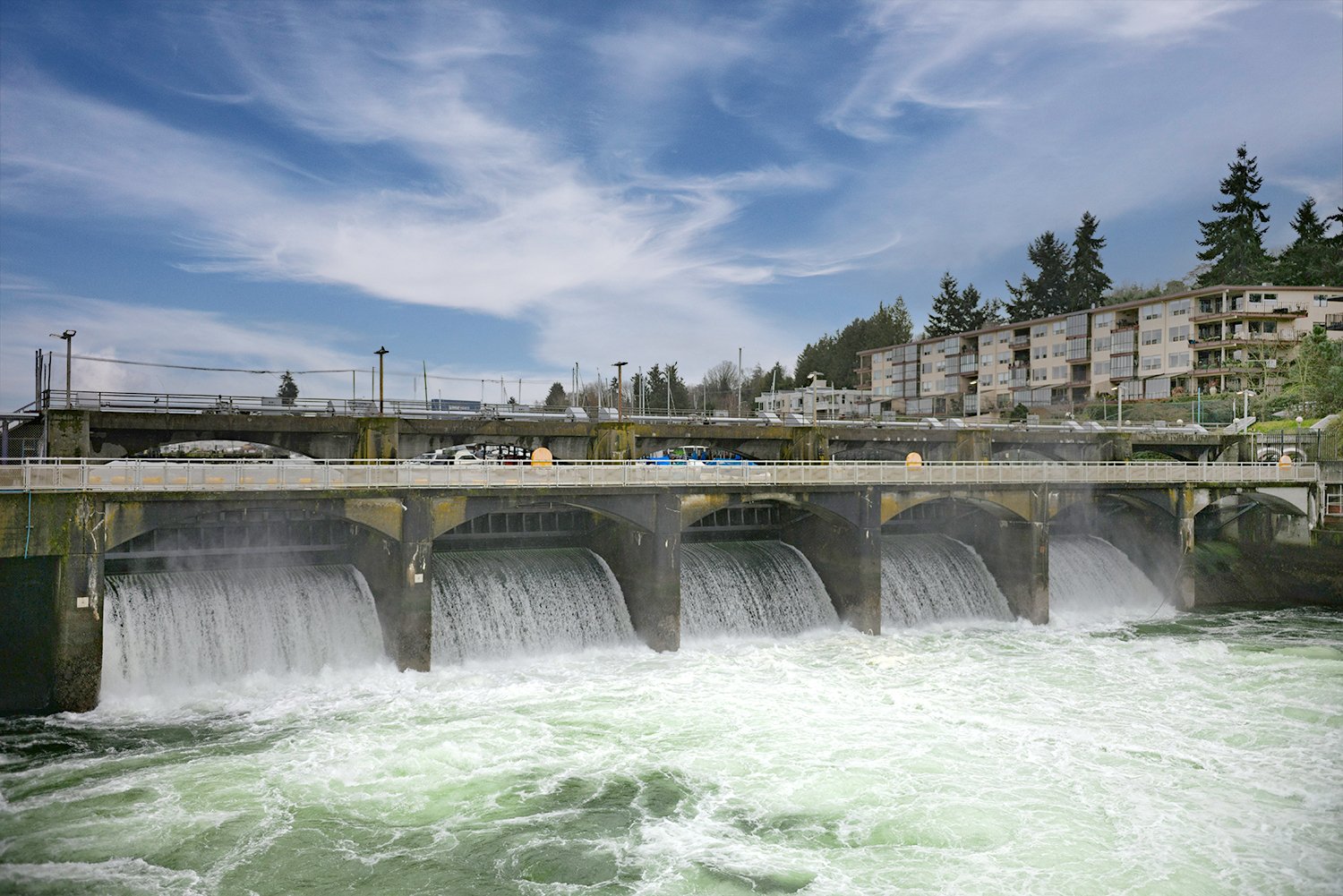
The photo above is the Ballard Locks, which is a much nicer way to think about sewer scopes than the actual footage.
The basic idea is the same, though: water is supposed to move in the right direction, through the right channel, without surprises. At the Locks, that means boats, gates, water levels, tourists, salmon, and usually someone explaining the whole thing to a visiting relative. At a house, it means the side sewer quietly carrying waste away from the home and out to the main line.
Nobody’s framing a sewer scope video and hanging it over the fireplace. But when you’re buying a Seattle home, that boring underground pipe can matter a lot.
A sewer scope is one of the least glamorous inspections in real estate, which is probably why it’s so useful. The kitchen gets attention. The floors get attention. The view, yard, light, and listing photos all get attention. The side sewer is underground doing quiet, expensive work that most people don’t think about until something backs up into the house.
In Seattle, I don’t think of sewer scopes as only an older-home thing. Older homes absolutely deserve the attention, especially with clay, concrete, cast iron, roots, old repairs, big trees, and decades of use. But newer homes aren’t automatically clear either. New construction can have its own sewer surprises: construction debris, damaged lines, crushed sections, poor installation, or pipes affected by heavy equipment moving across soft dirt before the site is finished.
The last time I had a sewer scope done for a client, I talked with the technician throughout the process and picked his brain while he worked. That kind of conversation is helpful because a sewer scope is easy to treat like a pass-fail inspection when it’s really more of a read. You’re trying to understand the pipe material, the condition, the layout, the access, and whether anything looks like a current or future problem.
The basic process is pretty straightforward. The technician needs a way into the sewer line. Sometimes there’s a cleanout in the yard, near the house, or along the side of the property. Other times, access is less convenient and they may need to pull a toilet and send the camera through that opening.
The camera is mounted on a long flexible cable wound around a hose-style spool. The technician feeds it through the line and pushes it out toward the main sewer line. The video you review is often recorded on the way back, after they’ve pushed the camera as far as they can.
That detail matters because you may be watching the pipe in reverse. You might see the city-main side first, then move back toward the house. Part of the reason is practical: the camera can pick up gunk on the way out, and the technician is usually trying to get the clearest useful view while pulling back and reading the line.
What a sewer scope is really trying to find is pretty simple: what is the pipe made of, where does it go, and is anything happening inside it that could create a problem?
The material matters. A Seattle side sewer may be clay, concrete, cast iron, PVC, ABS, Orangeburg, or a mix of old and newer sections. Sewer lines often get repaired in pieces over time, so a home might have newer plastic pipe near the house, older clay farther out, and a transition somewhere in the yard or near the street. That patchwork isn’t automatically bad, but it tells part of the property’s story.
The condition matters too. The camera is looking for root intrusion, cracks, breaks, offsets, separated joints, corrosion, debris, standing water, and bellies. A belly is a low spot where water sits instead of draining cleanly. An offset is where pipe sections don’t line up correctly. Roots may be a maintenance item, or they may point to a larger opening in the pipe.
The words in the report matter, but the severity and location matter more. “Roots” near an accessible cleanout can be a very different conversation from a broken section under a driveway, retaining wall, mature landscaping, sidewalk, or public right-of-way. A small issue to monitor isn’t the same as a section that needs immediate repair.
Layout is another big piece. A sewer scope helps confirm where the line actually runs. Does it go straight to the main? Does it bend across the yard? Does it run under a driveway, patio, retaining wall, addition, or alley? Does it appear to connect with a neighbor’s line before reaching the public main?
That route can change the repair conversation. A pipe problem under open dirt is one thing. A pipe problem under hardscape, a steep slope, a retaining wall, or a shared access area is another. The scope isn’t just showing the condition of the pipe. It’s also helping you understand how complicated future work could be.
Seattle also has online side sewer cards and maps that you can pull by address or parcel. These can be useful because they may show the recorded side sewer route, historical connection information, or older diagrams. They’re a good starting point, but they’re not the same as a camera inspection. The card may be old, incomplete, hard to read, or missing later work. The sewer scope shows what the camera can see now.
Shared side sewers are worth paying attention to. Some Seattle homes connect to a line that also serves a neighboring property, or one private line may join another before reaching the public main. That can be nice if costs are shared and everyone agrees on the work. It can also get tricky if your bathroom is the one overflowing and you need to convince someone else to participate in a repair.
Shared infrastructure isn’t automatically bad. It just needs to be understood. Who’s responsible? Is there a recorded agreement? Has the line been maintained? Where does the shared portion start? If work is needed, who needs to approve it? Those are not questions you want to discover for the first time during a sewage problem.
Some home sales include a pre-listing sewer report, and that can be helpful. But it still needs to be read carefully. Did the camera reach the main? Was the whole line visible? Was there standing water? Did the technician note roots, cracks, offsets, or a belly? Was the line recently cleaned before the video? Was there a recommendation to repair, clean, or monitor?
A clean-looking report can give buyers confidence. A report with issues doesn’t automatically kill the deal. The point is to understand what the issue is, where it is, how serious it looks, and whether a sewer contractor should provide a repair estimate before you make a decision.
The tech I spoke with also made a point that stuck with me: newer homes can have weird sewer issues too. He mentioned once seeing an entire pack of nails sitting in the middle of a pipe on a new construction property. Someone had dropped it during construction, it slipped into the line, and there it was on camera.
He also said soft dirt on a construction site can be a factor when heavy trucks drive over buried pipes before the site is finished. That doesn’t mean every new construction home has sewer risk. It just means new construction isn’t magically exempt from underground mistakes. New materials are good, but installation and site conditions still matter.
For older homes, the usual suspects are different. Roots are common around mature trees. Clay and older pipe materials can crack, shift, or separate. A line may have low spots where water sits. A previous repair may have fixed one section but left another aging section in place. None of that automatically makes the house bad. It just gives you better information about the real cost of ownership.
The cost question is where buyers should be careful. In casual conversation, a rough conservative excavation estimate you may hear is around $1,000 per foot, often thought of in chunks of several feet at a time. That is not a quote, and it can be wrong in either direction. Depth, access, street work, landscaping, slope, hardscape, pipe location, permit needs, repair method, and contractor pricing can all change the number.
The only number to rely on for a real decision is a current estimate from a qualified sewer contractor. Still, having a rough sense of scale helps buyers think clearly. Sewer repairs can be expensive enough that they shouldn’t be ignored, but not every sewer finding means disaster.
For sellers, a sewer scope can be a smart pre-listing move. If the line looks good, the report can give buyers confidence. If there’s a problem, the seller can decide whether to repair it, disclose it, get bids, price accordingly, or prepare for negotiation. Finding out before listing is usually calmer than discovering the issue in the middle of a buyer’s inspection period.
For buyers, a sewer scope is part of understanding the whole property. It belongs in the same mental category as roof age, drainage, foundation, electrical, plumbing, heating, and basement condition. The pretty parts of a house matter, but the expensive boring parts often decide whether the home still feels like a smart purchase after closing.
It can also help you compare homes more fairly. A dated house with a newer documented sewer line may have a real advantage over a shinier remodel with an unknown side sewer. A newer townhome with a scoped and clear line may feel stronger than one where nobody can explain the shared utility setup. A home with a known sewer issue may still be worth buying if the price, risk, and repair plan make sense.
The main thing is not to turn the sewer scope into panic. It’s information. Sometimes boring information. Sometimes expensive information. Sometimes reassuring information. But it’s better to understand the pipe before you buy than to discover the story after your first backup.
That’s how I think about sewer scopes in Seattle real estate. Not as a reason to be scared of older homes, newer homes, townhomes, or anything else. Just as a practical way to understand one of the systems that keeps the house livable.
A good home search leaves room for the boring questions. Sewer, drainage, roof, electrical, heat, storage, access, parking, and layout aren’t as exciting as the photos, but they’re usually where the real confidence comes from.
Useful references: Seattle Side Sewer Cards and Maps, Seattle Public Utilities Side Sewer Information, Seattle SPU Forms & Resources, Side Sewer Cards and Water/Sewer Maps, Seattle Department of Construction and Inspections Property Research, King County Parcel Viewer, and NWMLS.
If you're buying a home in Seattle, visit my Seattle buying guide. If you're thinking of selling your home, start with my selling roadmap. Browse Seattle neighborhoods or learn more about me.